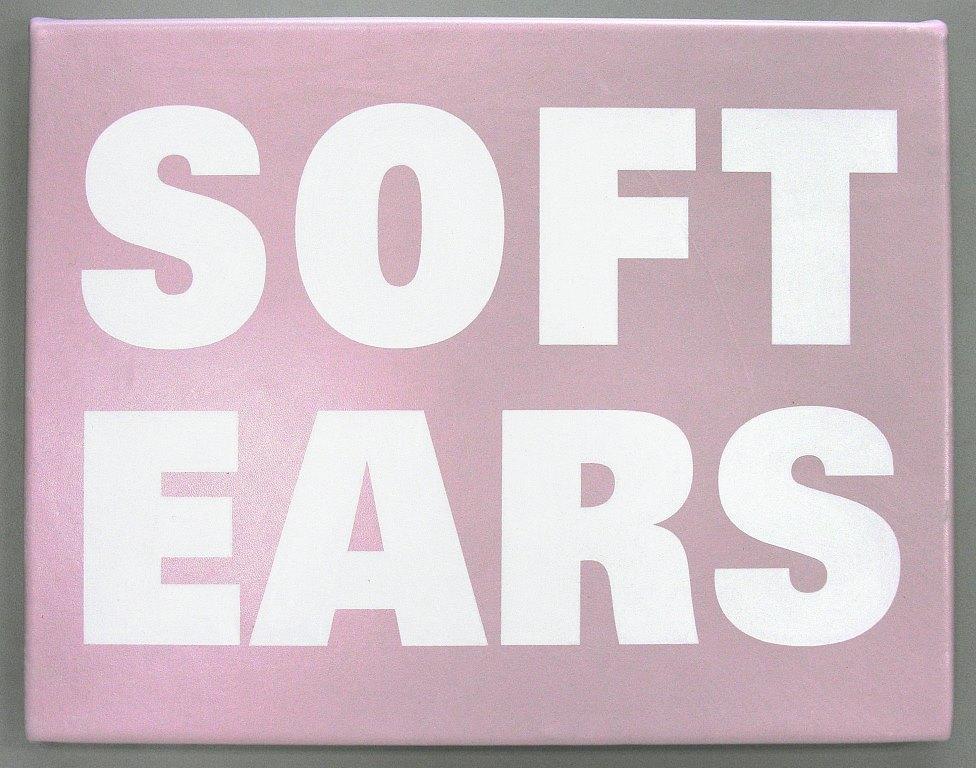
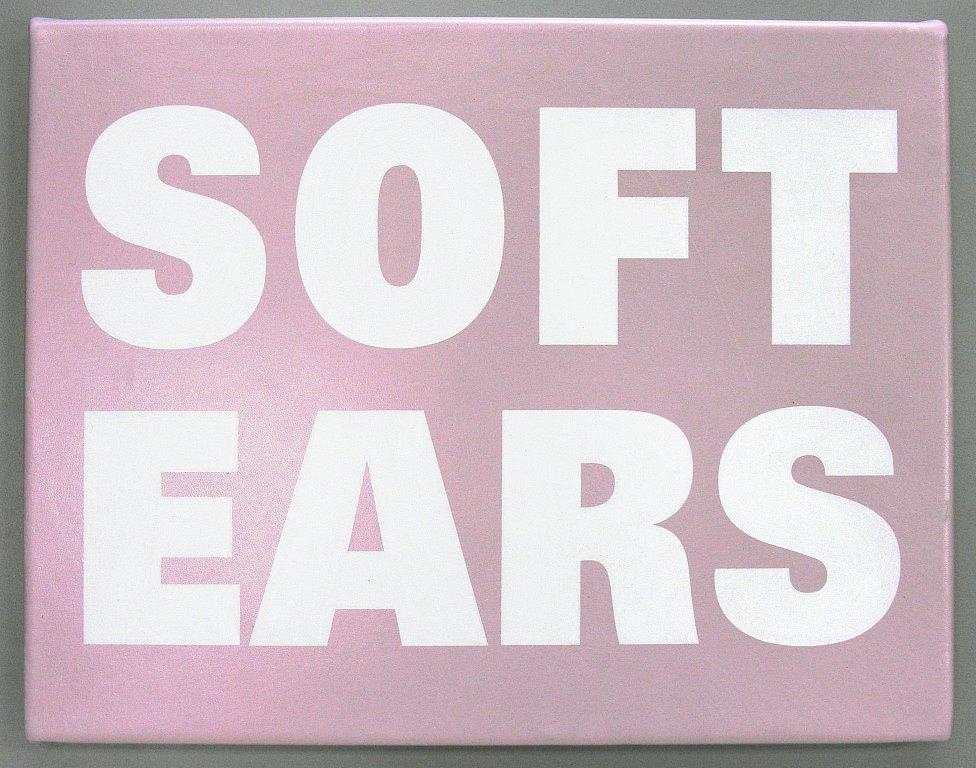
Mary-Louise Browne, Soft Ears, 2005, acrylic, enamel on leather, Chartwell Collection, Auckland Art Gallery Toi o Tāmaki.
The Appendix is an ongoing series of artist interviews that extends Being, Seeing, Making, Thinking: 50 Years of The Chartwell Project by spotlighting artworks from The Chartwell Collection to offer deeper insight into individual practices and the wider significance of the Collection.
Mary-Louise Browne is an Auckland-based artist whose interdisciplinary, text-based practice gives spatial and sculptural presence to language, playing with meaning and ambiguity. Her work is widely represented in public and private collections, and she has undertaken numerous public sculptural commissions. This interview discusses a collection of nine related artworks acquired by The Chartwell Collection in 2005.
Chartwell: In your sculptural practice, you’ve worked with industrial materials such as glass and marble. For these text paintings, which you’ve produced off and on for more than two decades, you paint on leather. What inspired you to choose leather as the substrate for this series?
Mary-Louise Browne: Coming from that sculptural background you've just identified, materiality is very important to me. I’ve made works by etching into glass, sandblasting into onyx and stone, and weaving woollen carpets. I’m not a conventional painter, and I don’t want these works to resemble paintings, so why would I use canvas on a stretcher? Even when I have used linen canvas, I've treated it like something else, such as wallpaper.
I chose leather because, in the early works in this series, such as Love Bite, I wanted the material to look like flesh, and the colours are combined in such a way that they would look like lipstick, eye shadow, foundation, and hair dye. Leather also has physical attributes that work better for painting text—although there has been some attrition. All pieces of leather are different, you know, because it is skin.
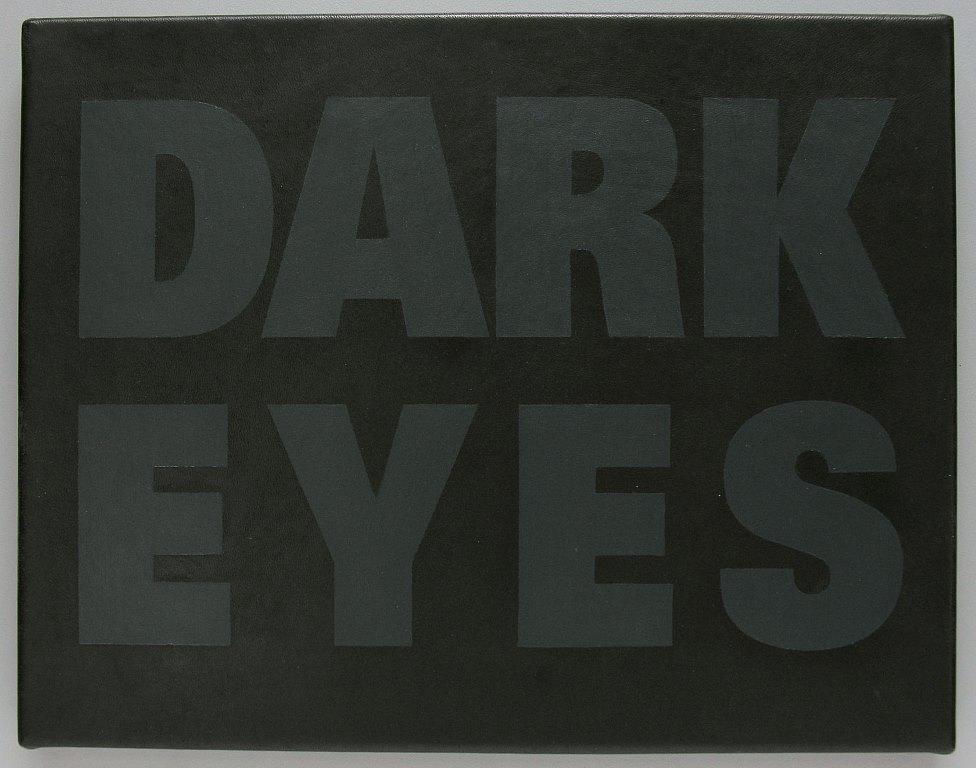
I wanted the works to feel bodily because, initially, they were operating like an unspoken portrait of somebody, comprising physical and intellectual attributes. The nine in The Chartwell Collection are individual works, but they form a complete body. I started from the top, with Dark Eyes, Soft Ears, and Oval Face, and worked my way down to the bottom. This person has a Full Body but Lean Arms, Slim Hips, Long Legs, and Tiny Feet. It may well be a description of a woman.
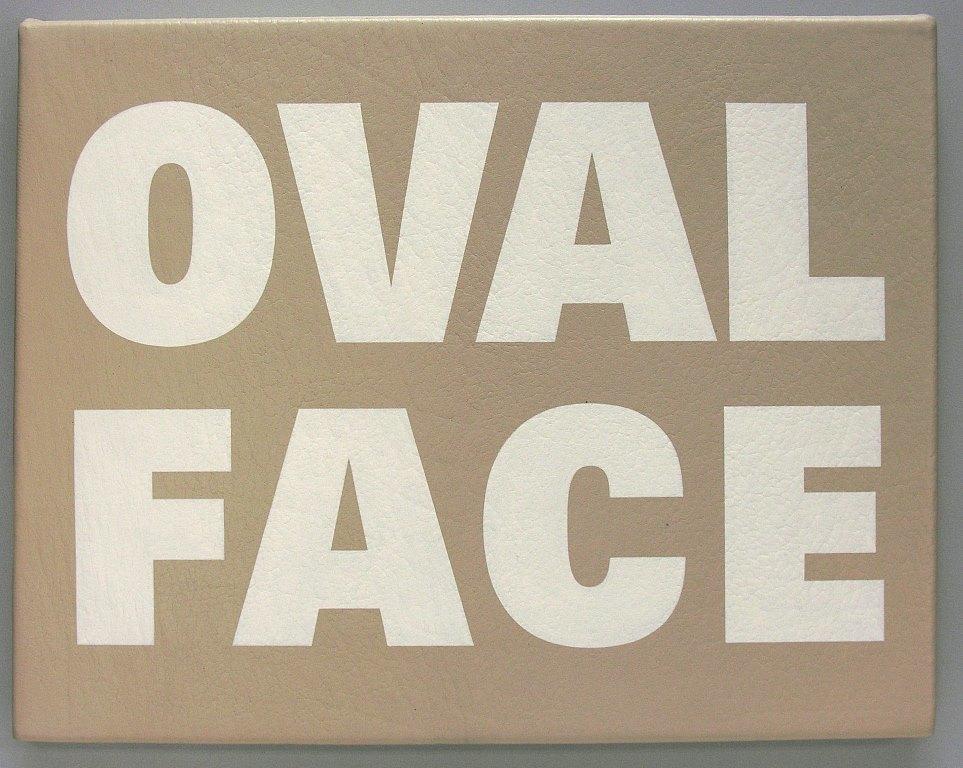
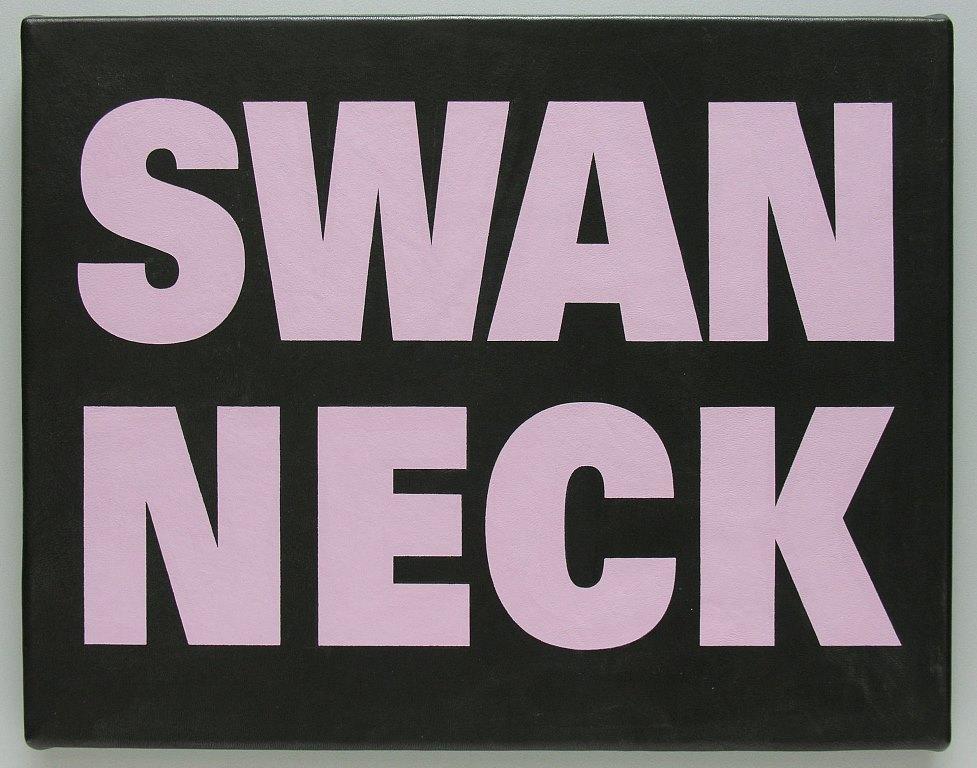
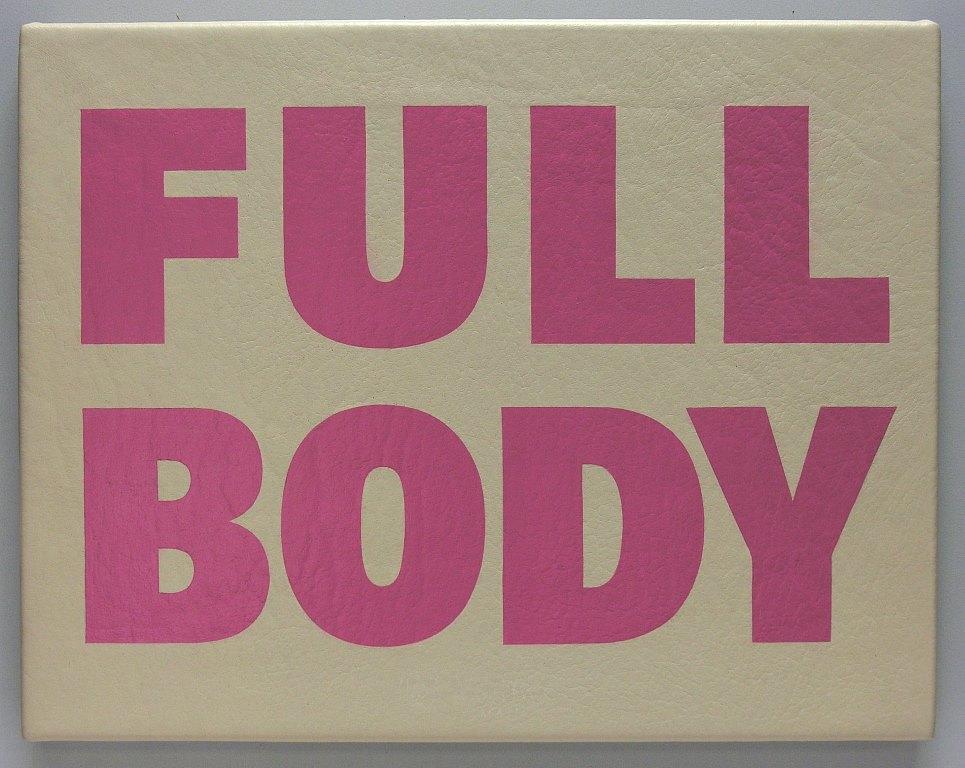
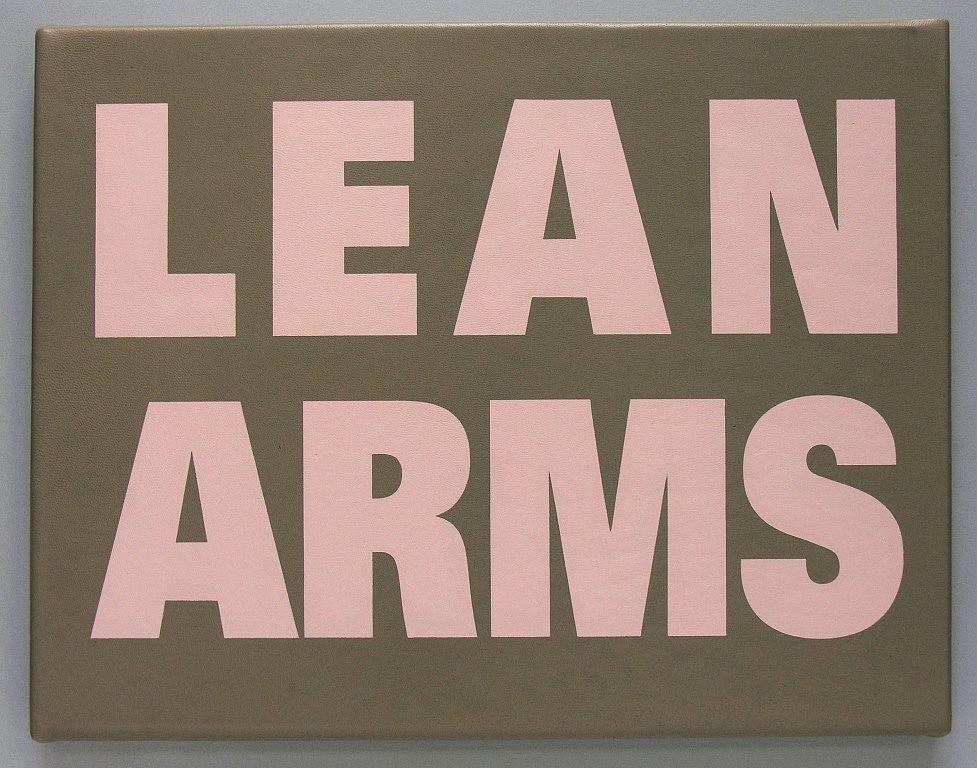
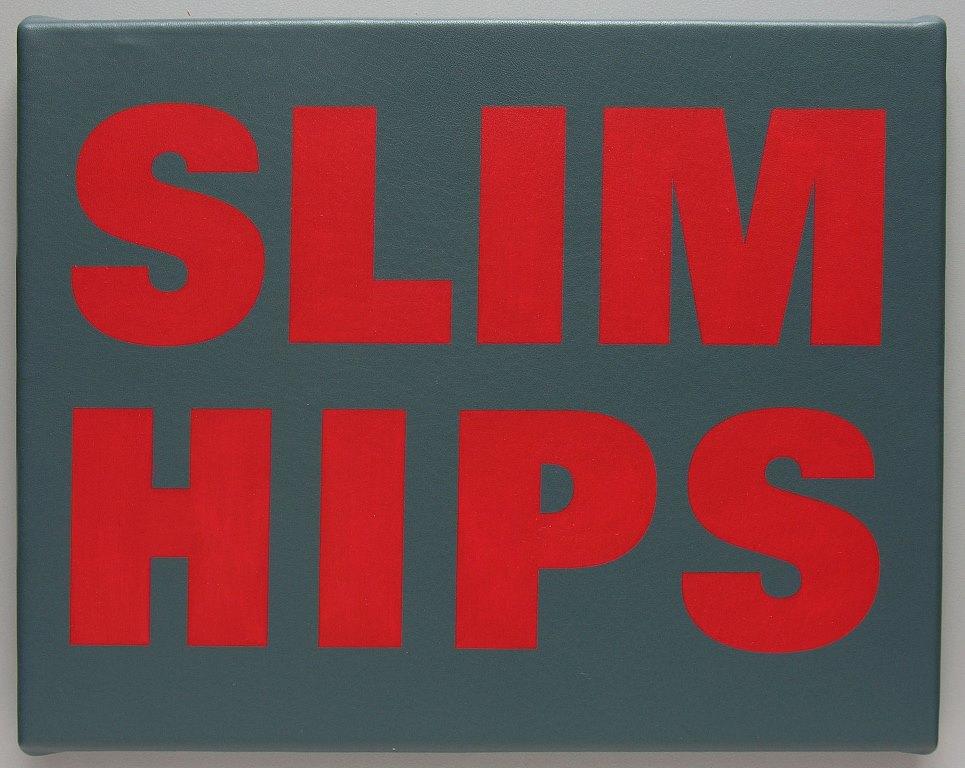
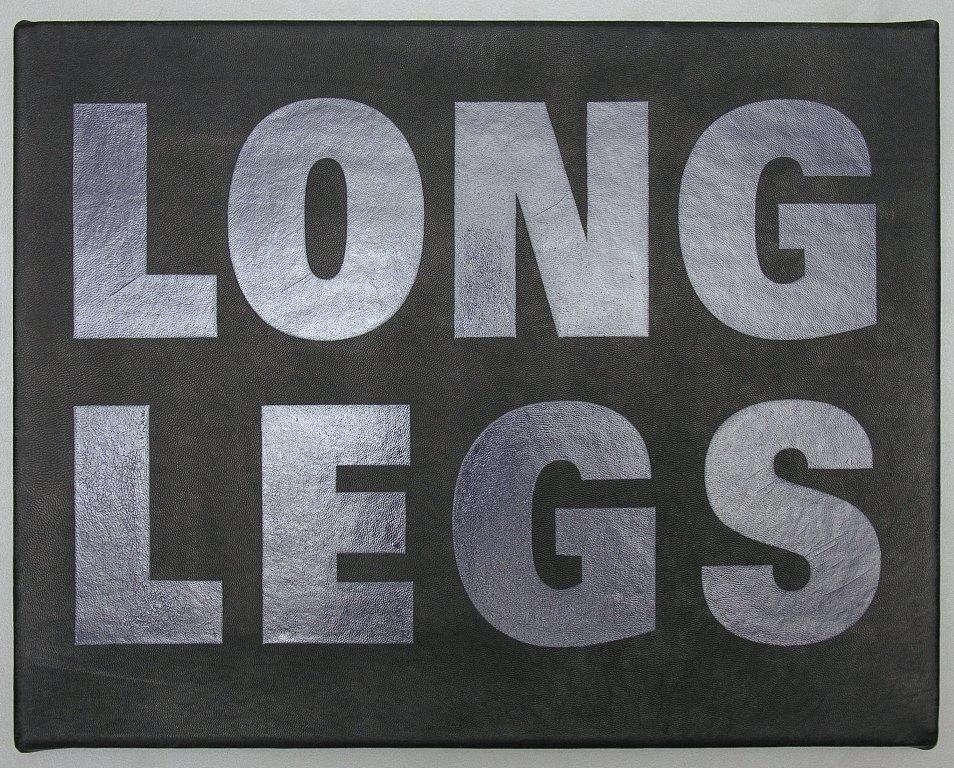
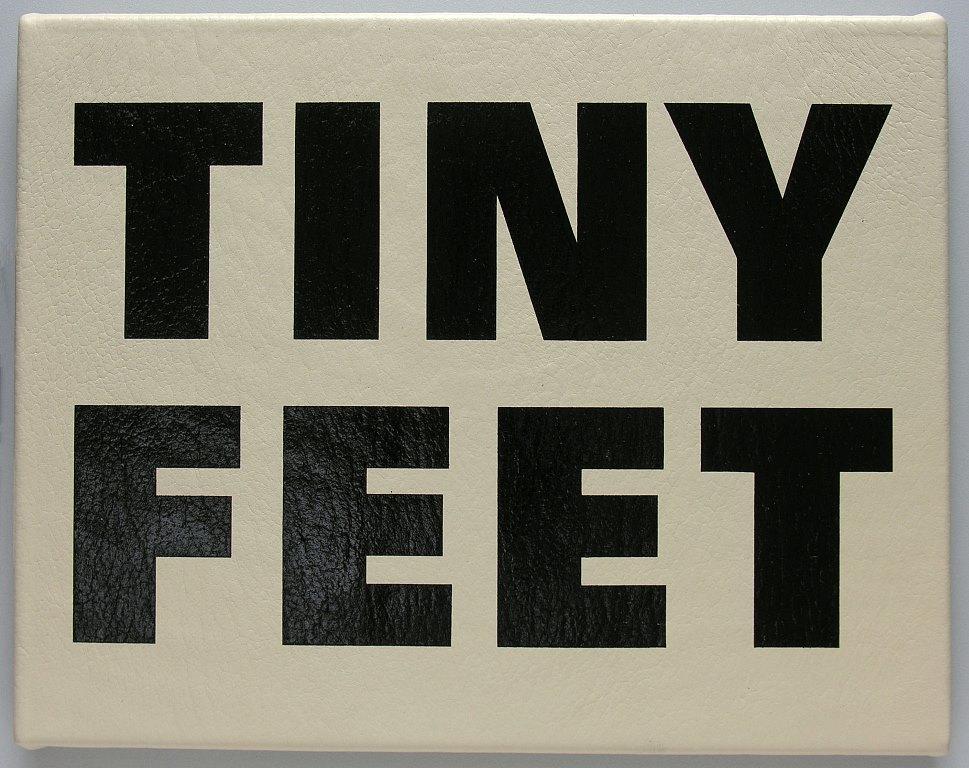
Chartwell: These works come from one of several series based on pairs of four-letter words. What about that mode appealed to you?
Mary-Louise Browne: I'm a formalist, and so it wasn't all about the text. It was about the feel of it. With this system, I could reduce the text to two ‘four-letter words’, which could be a little bit funny if you think about it.
These are also the most edited down text works I've made. If I have a single word, like GRAND, that single word extrapolates into a huge amount of other associations, but these two four-letter words, adjective-noun paintings are really contained. And I think they're quite accessible too. Initially, someone might ask, “Why is someone making this into an artwork?” And then they read it and think about how it might relate to them. They reflect on it, and think, “Yes, maybe I do have a swan neck.” It's like a portrait, an assemblage of physical and psychological attributes.
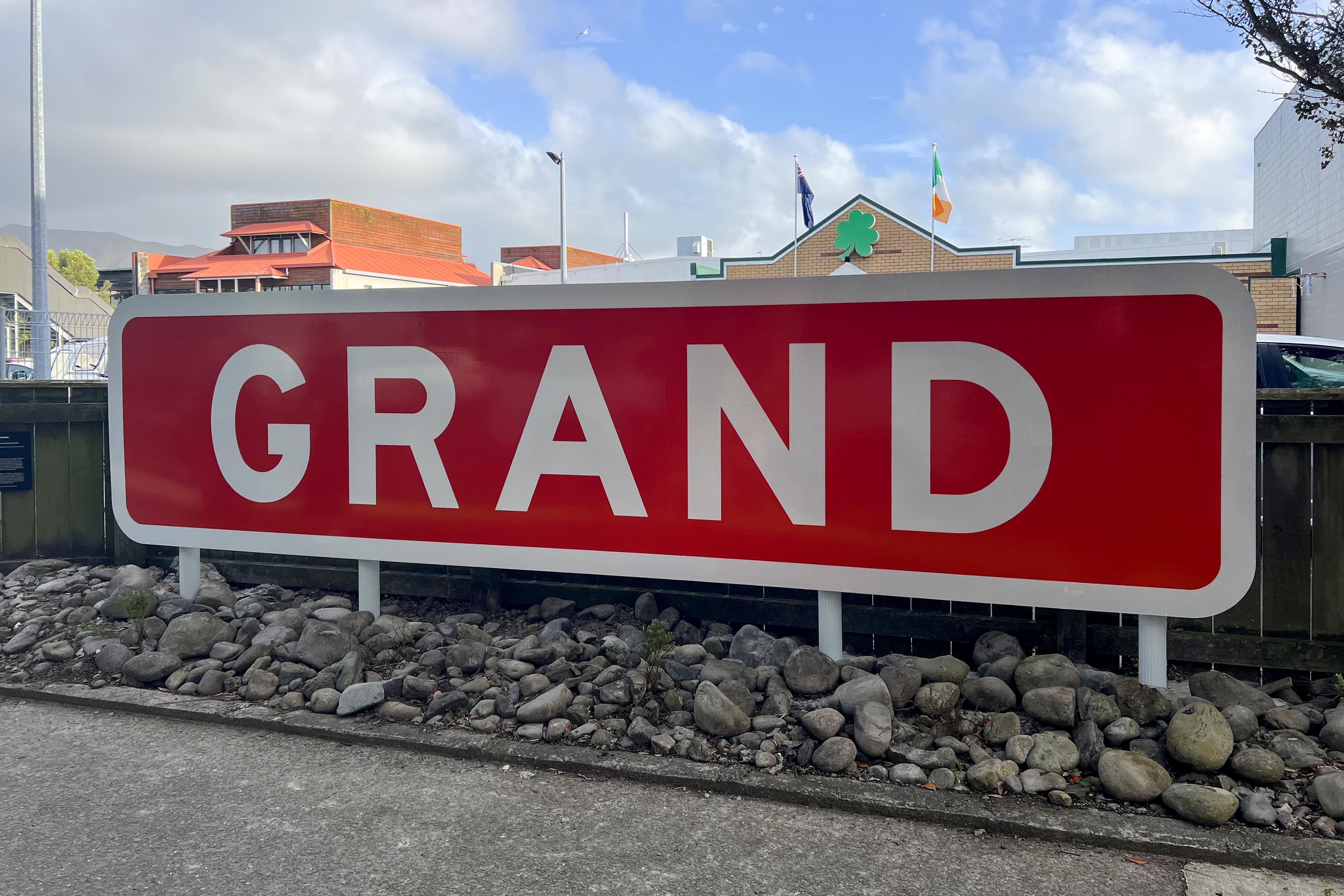
Mary-Louise Browne, Grand, 2022, high intensity prismatic vinyl on aluminium panel. Image supplied.
Chartwell: Some of the expressions you use in The Chartwell Collection series, such as Swan Neck and Full Body, are familiar clichés from magazines and advertising, whereas others like Tiny Feet and Soft Ears read more ambiguously. In other bodies of work, you’ve quoted strings of text from Batman movies and Francis Pound essays. Were these pairs of four-letter words found phrases?
MB: No, that's just language. I've made lists and lists and lists of those combinations. Because I'm interested in the structure of language too, and all its cute little palindromes and transmutations. Changing one letter at a time to get another word, a real word, and going from opposites, from BLACK to WHITE or WHITE to BLACK.
Photographer Greta Anderson came across a couple of these at Megan Jenkinson's house and she was really fixated on them, and saw Soft Lips as being very sexual. And I said, actually, you can read it like that, cause they pop up, you know, these kinds of connections.
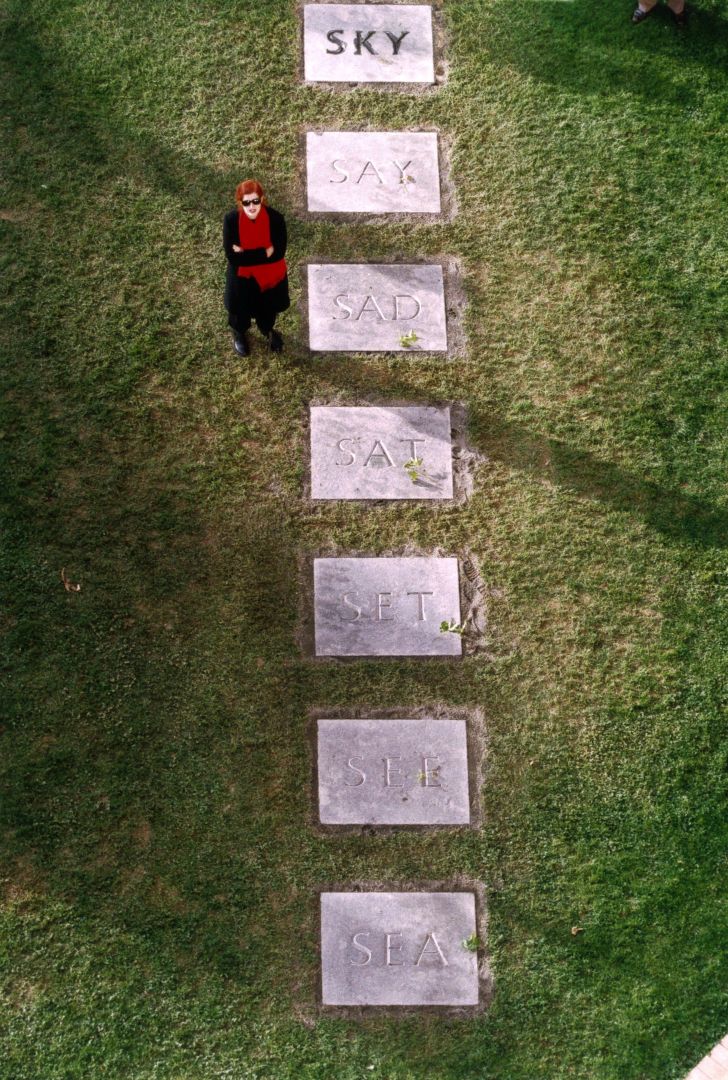
Chartwell: An expression like Long Legs has a quite palpable, direct meaning. However, when you first made these paintings, much of your sculptural work dealt in comparatively enigmatic idioms and language games. For example, the 1999 sculpture Seven Steps to Heaven is a word ladder chaining “SKY” to “SEA” across seven inscribed stepping stones. How did these paintings develop from the work you were making?
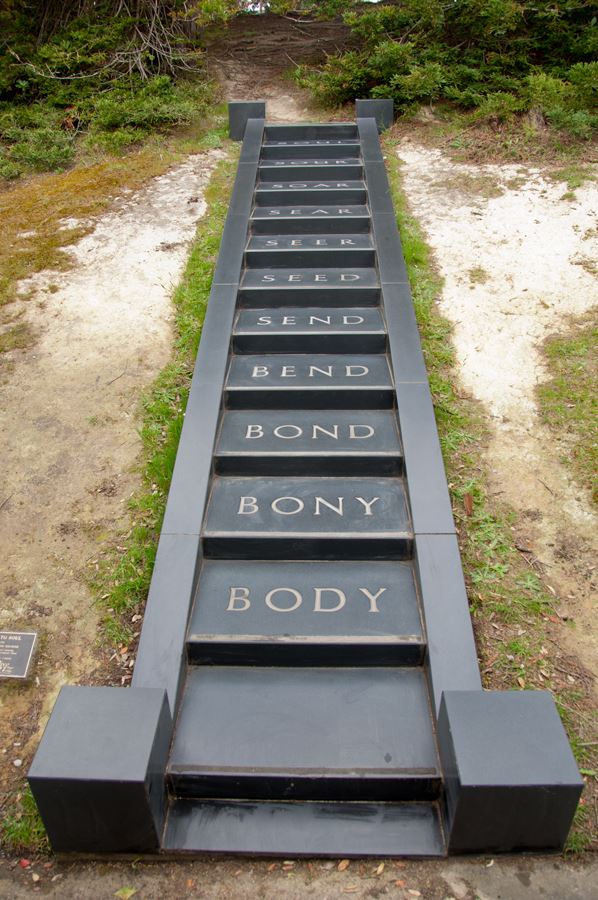
Mary-Louise Browne: At that time, I had been identified as somebody who made work that was architectural. I was based in Wellington, and had made Body to Soul for Wellington Botanic Garden, and Seven Steps to Heaven for Civic Square. These paintings were me moving into a different kind of material, and operating on a smaller scale. Everything was getting quite hefty, and the stretched leather felt lighter.
Chartwell: In an interview from 2005, you compared the way your texts address the viewer to an experience of watching a film: “I was watching a Nicolas Cage film; he was looking straight at the camera, emphatically telling someone to get out of the house. So you are sitting in your own home, and you have Nicolas Cage screaming at you to get out of the house, and you think a bit about your own situation, that ‘Yeah, I've got to get out of the house a bit more.’” Do your works address the viewer in that way?
Mary-Louise Browne: Yes, they are supposed to literally speak to you.
You have to be very careful how you use language in artworks. It's like using red paint when you are a painter. Not many people paint walls red because it can be extremely overwhelming and confronting. And I feel the same way about text. You have to be careful that what you're using isn't offensive, isn't going to be misconstrued, and isn’t too naff.
Chartwell: How do you source your leather?
Mary-Louise Browne: Towards the end of my sourcing leather, I went to the Newton Road Fabric Warehouse. Before that, I used to collect cast-offs from factories in Avondale where they made handbags, shoes, and leather furniture. I used to scrounge. And in the early days there was a deliberate relationship between those industrial uses—the handbags and shoes, in particular—and the ‘cosmetic’ palette I was working with.
When I’m working in a series, I look at one work and I think, “Does that look good or read well with the next one? And does that one look good and read well next to the following one?” You don't want to have everything matching, but they have to feel like they roll together nicely.


