The Fall of Man arranged for German Fingering
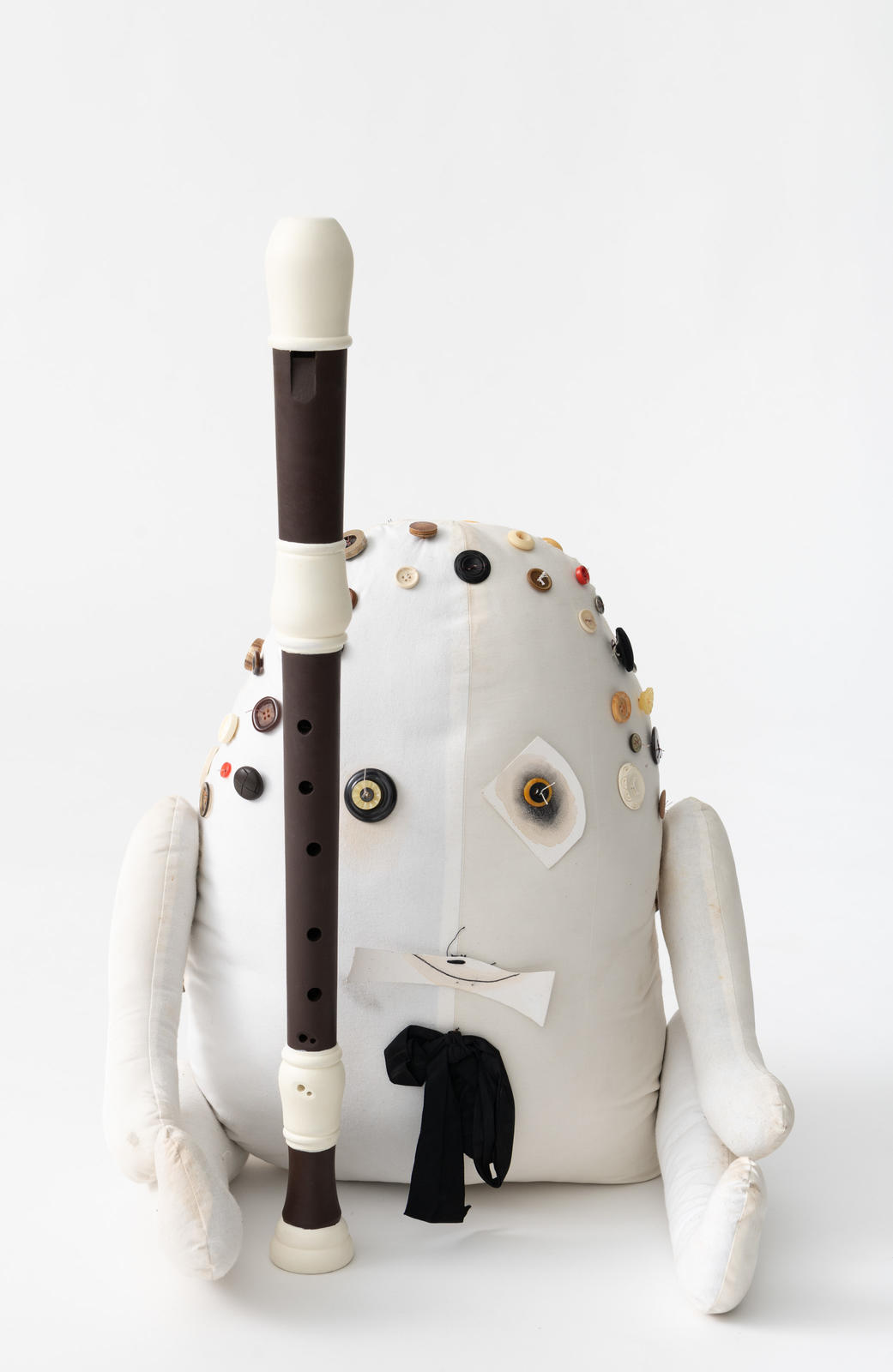
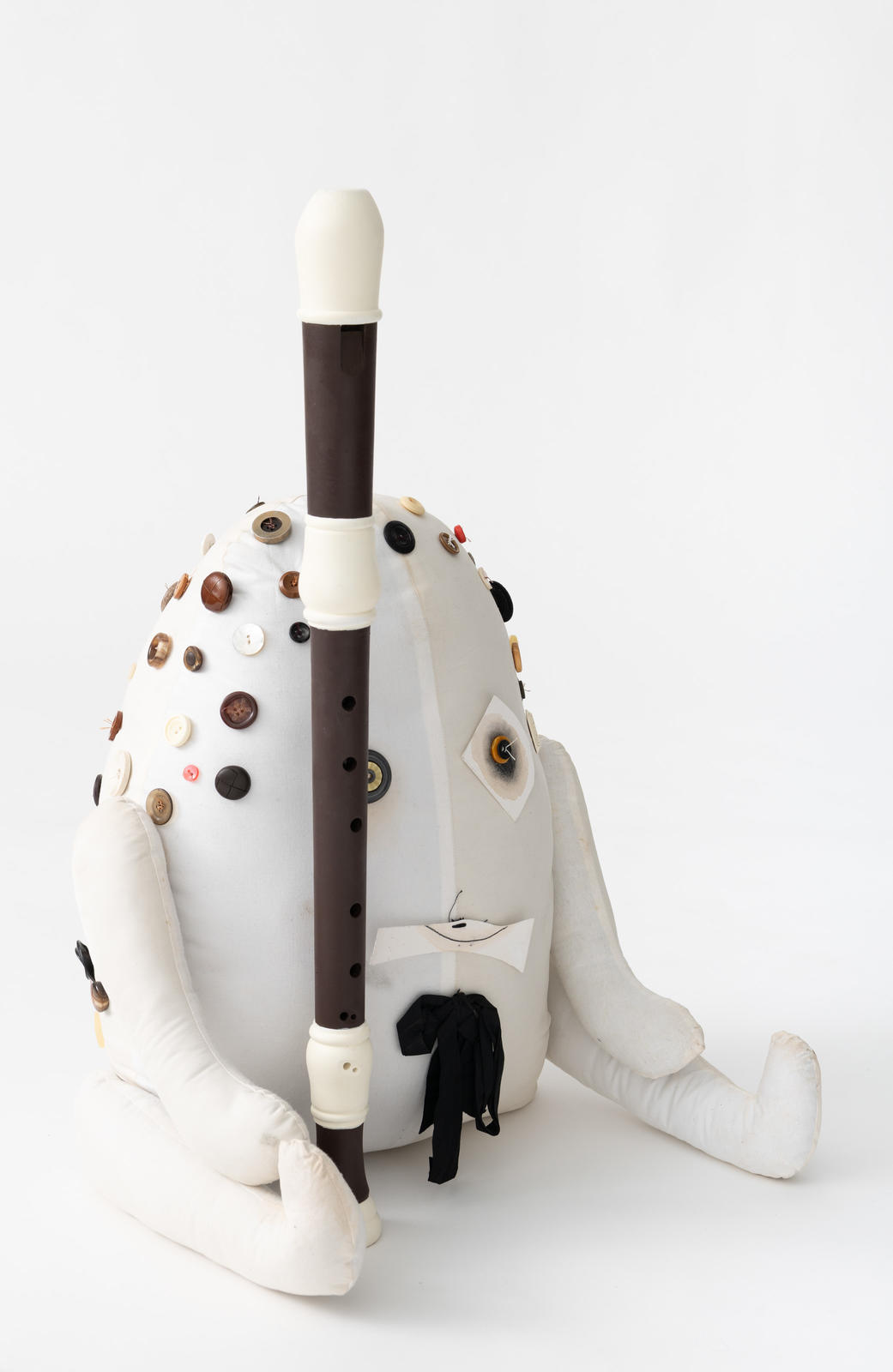
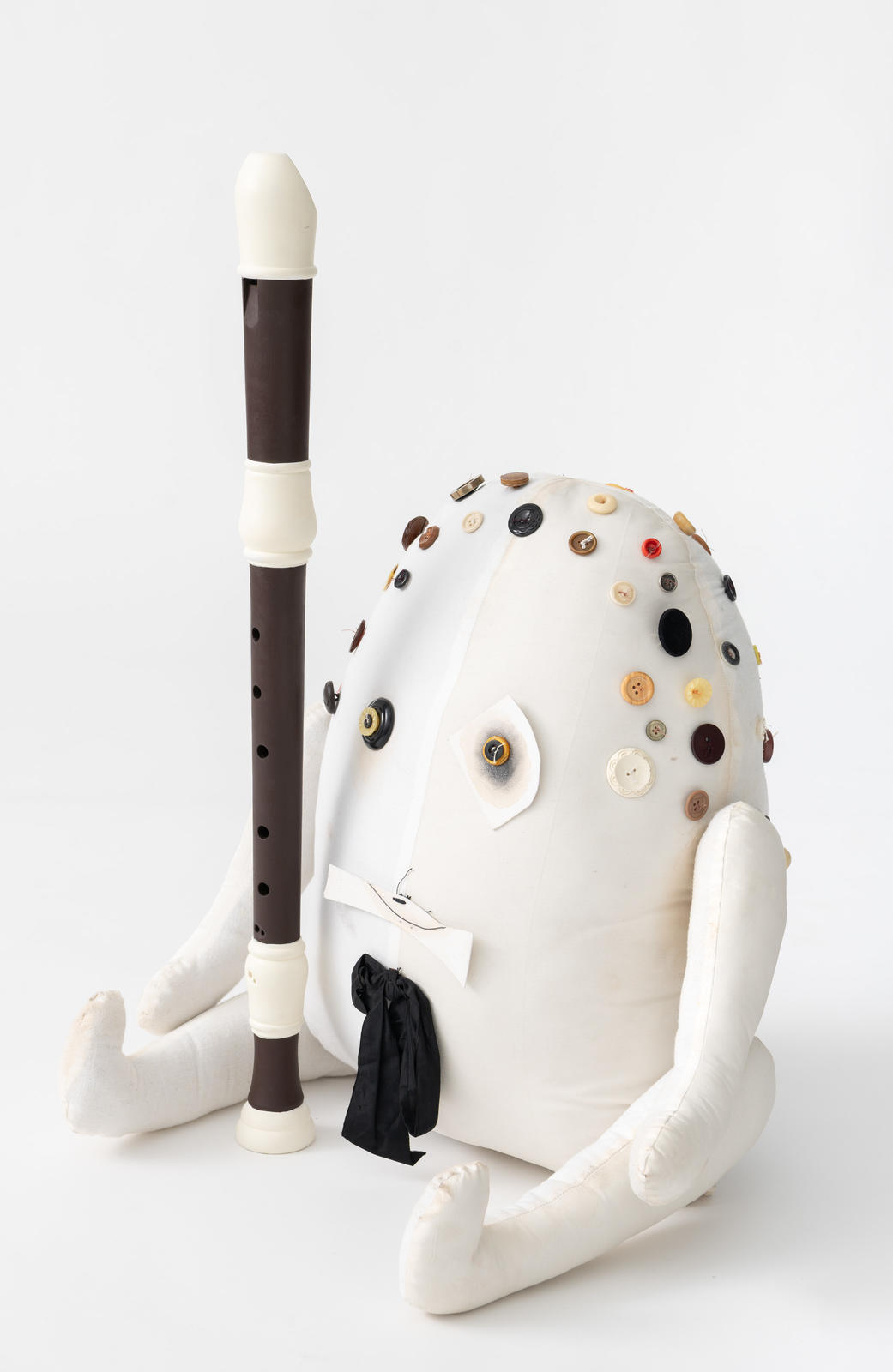
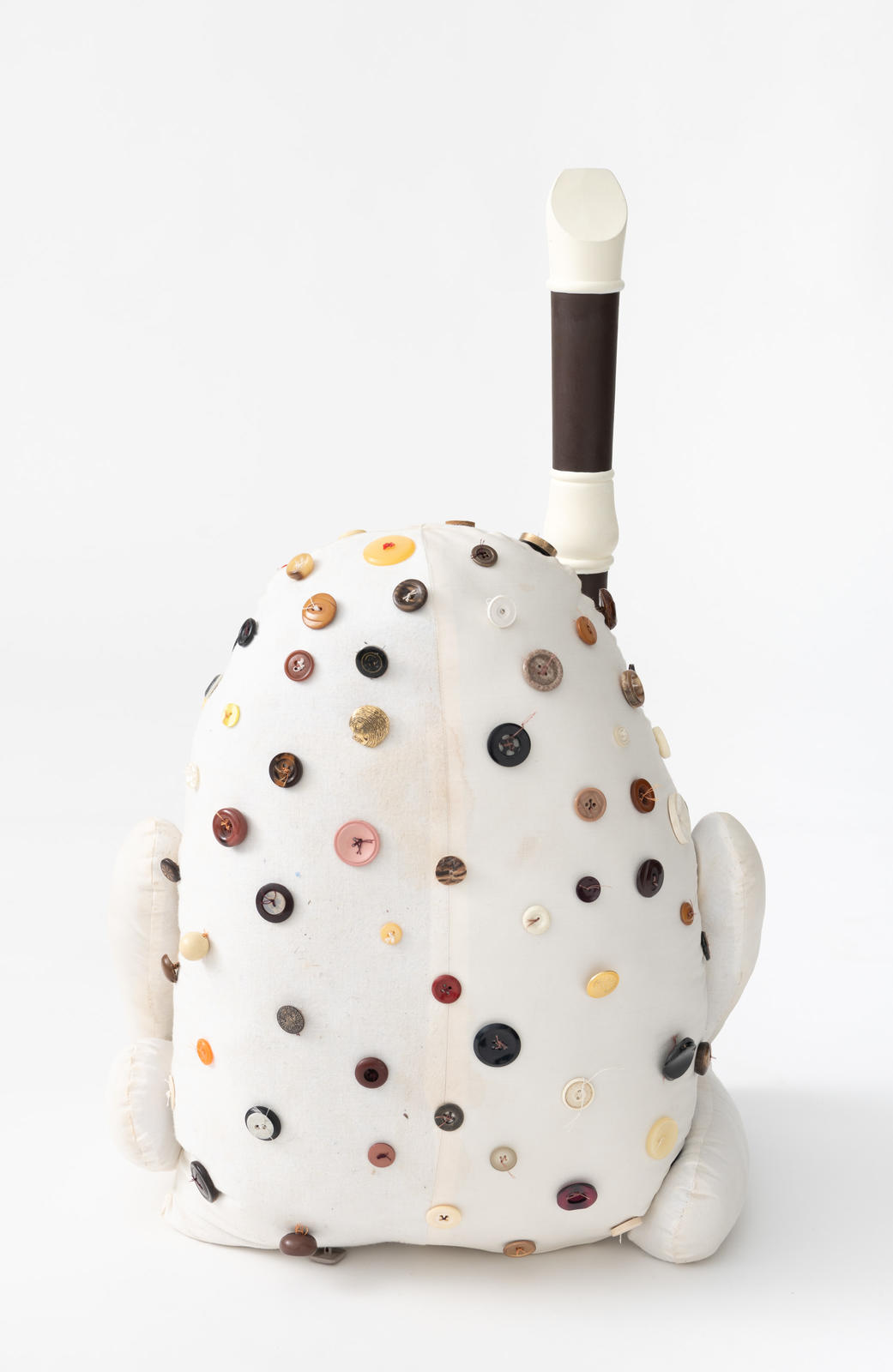
The Fall of Man arranged for German Fingering
-
Artist
-
Production Date
2024-2025
-
Medium
oil, acrylic, graphite and lacquer on birch and turned linden, silk and cotton, sheep wool, cotton thread, assorted buttons
-
Size
650 x 590 x 560 mm
-
Credit
Chartwell Collection, Auckland Art Gallery Toi o Tāmaki, 2025
-
Accession Number
C2025/1/2
-
Accession Date
12 Jun 2025
-
Department
New Zealand Art
-
Classification
Object
-
Collection
Chartwell
-
Chartwell Notes
Oscar Enberg describes his studio process as intuitive: "a series of digressions and wrong turns that sometimes lead somewhere novel and productive." Stacked with literary references, archetypal forms, and hyperlocal found materials, his poker-faced assemblages invite viewers to “read” them as one might decipher a modernist novel.
The Fall of Man arranged for German Fingering combines three recurring motifs in Enberg’s recent practice: Humpty Dumpty, the recorder, and buttons.
The nursery rhyme Humpty Dumpty — Hümpelken-Pümpelken in German — was first published in 1797, while Lewis Carroll’s Through the Looking-Glass cemented the image of Dumpty as an egg. Enberg’s version, however, draws more closely on James Joyce’s Finnegans Wake, where the figure becomes a motif for Adam and Eve’s expulsion from paradise: the Fall of Man.
One of the Renaissance’s most popular woodwind instruments, the recorder even makes a cameo in Hamlet: “Come, some music! Come, the recorders!” Its resurgence in the early 20th century came amidst the broader early music revival led by figures such as Arnold Dolmetsch. Instrument maker Peter Harlan adapted the recorder to a simplified diatonic system known as “German fingering”, and the popularity of Harlan’s easy-to-learn folk instrument among German youth prompted musicologist Edgar Hunt to introduce the design to Britain, before wartime restrictions on German imports led to the plastic recorder familiar today.
Taken together, this sly sculpture with the stuck-on smile speaks to Enberg’s preoccupation with the shifting function and meanings of the past: the instrument revived amidst Germany’s reckoning with its loss of empire, Dumpty a symbol of autocratic incapacity ("all the king’s horses and all the king’s men…"), and the humble button, which Engberg describes as "at once sophisticated and dumb, ubiquitous and highly specific […] a sort of witness to everything."